
Where to Take the Best Photos in Provence: A Photographer's Travel Guide
Eight of the most photogenic spots in Provence - lavender fields, ochre cliffs, Roman ruins, flamingos - with exact timing, light, and composition tips for every location.
May 31, 2026 · 16 min read
Provence rewards photographers who show up early, plan their timing, and resist the urge to shoot from the car window. We've spent time working through its eight most photogenic locations - from an 878-year-old abbey at peak lavender bloom to wild flamingos in a Mediterranean wetland - and what follows is an honest, detailed account of what each one offers a camera.
The region spans coast to high plateau, Roman ruin to Cistercian monastery. The subjects are genuinely extraordinary. But Provence is also heavily photographed, and the difference between a powerful shot and a postcard cliché often comes down to three variables: season, light, and where exactly you're standing.
TL;DR
The non-negotiable Provence shots: Sénanque Abbey with lavender in early July (sunrise only), Gordes village from the D156 overlook at golden hour, and Valensole Plateau at 6:30 AM before the haze rolls in. For the rest - ochre cliffs at Roussillon, flamingos in the Camargue, calanques near Cassis, Roman ruins in Arles, and castle views at Les Baux - early morning and late afternoon are the rules, midday is for coffee. A car is essential; most of the best locations have no reliable public transport.
The lay of the land
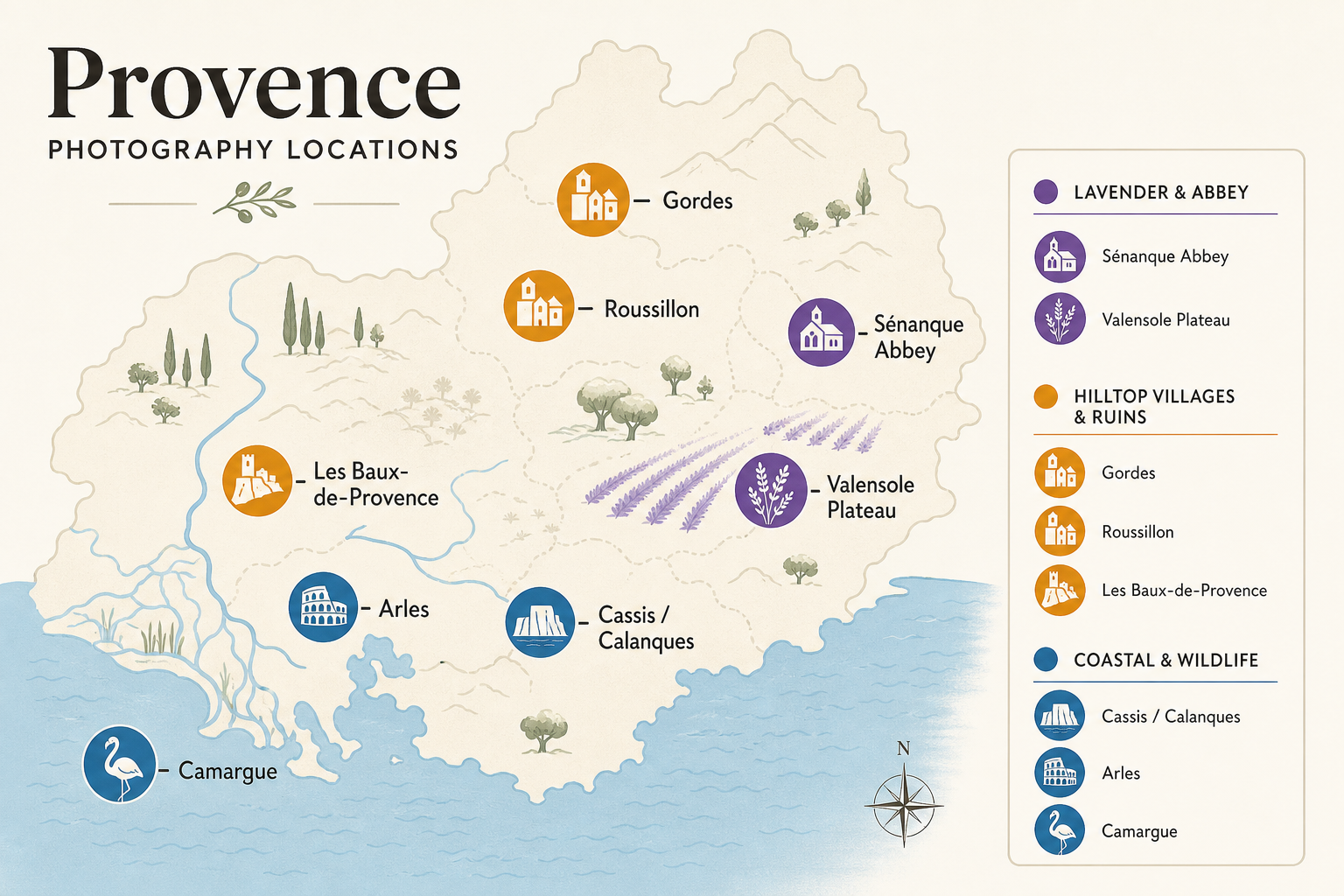
Provence covers a lot of ground. The Luberon Natural Regional Park in the north holds most of the hilltop villages and the lavender plateau at Valensole. The Alpilles - a small limestone range west of Luberon - is where Les Baux sits. South and east is the coast: Cassis, the calanques, and eventually Marseille. East of the Rhône Delta, the Camargue is a different world altogether - flat, marshy, and full of birds. Arles anchors the area between the Camargue and the Alpilles.
When to go
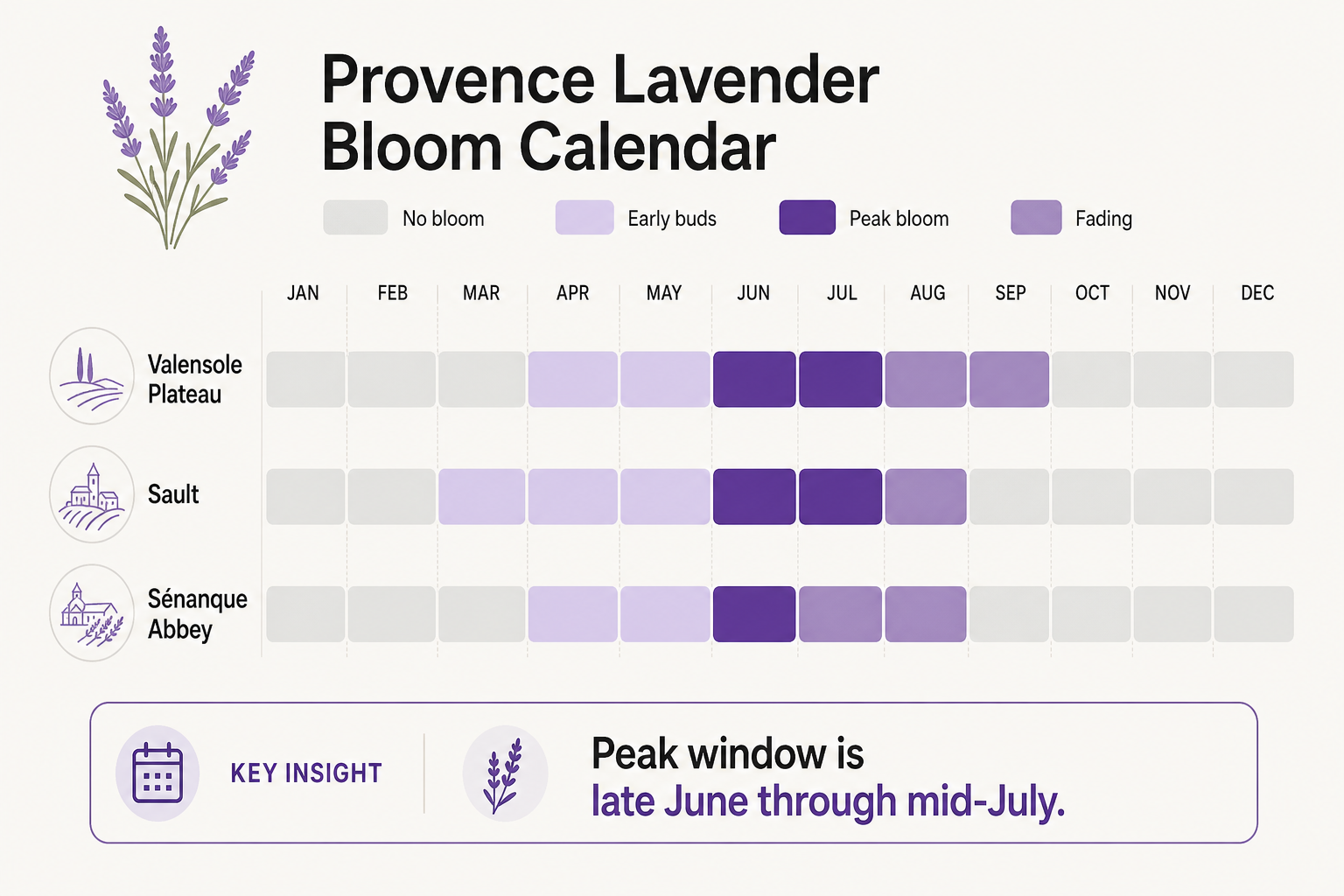
If lavender is your main goal, the window is narrow. Valensole Plateau peaks from late June through mid-July. Sénanque Abbey's celebrated lavender rows - the ones framing the abbey facade - typically bloom early July. Sault, at higher elevation, runs one to two weeks behind Valensole, which gives you a backup window if you miss the first. Outside lavender season, May-June and September-October offer the best combination of good light, manageable crowds, and full photographic access everywhere.
July and August are peak summer - clear skies, intense midday sun, crowds at their heaviest. Golden hour in midsummer runs sunrise around 5:30 AM and sunset past 9 PM, which gives you exceptional light windows at either end of very long days. Midday from 11 AM to 3 PM is essentially a write-off for landscape photography - the light is hard, colors wash out, and every viewpoint is packed.
1. Sénanque Abbey
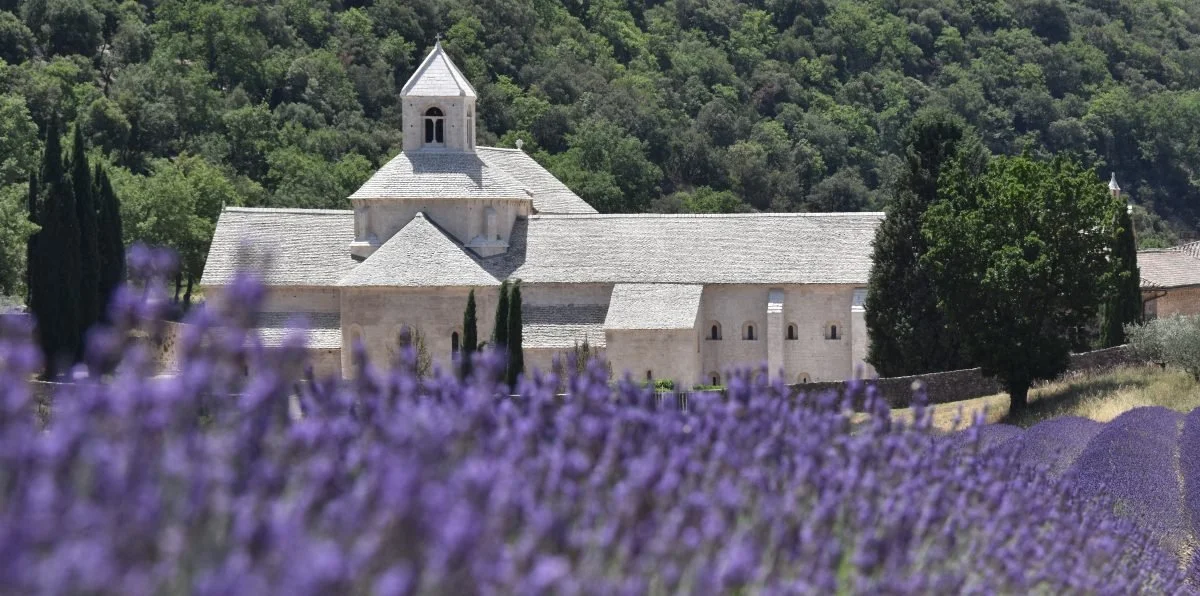
Sénanque Abbey is the most photographed location in all of France for one specific reason: the composition of 12th-century grey Romanesque stone set against rows of purple lavender in front of a pale Provençal sky is as close to a perfect photograph as a landscape can offer. Founded by Cistercian monks in 1148, consecrated in 1178, and still actively occupied today, the abbey sits in a narrow valley 3km from Gordes via the narrow D177 road.
The shot everyone wants is the abbey facade centered with lavender in the foreground. Getting it requires two things: being there during early July when the lavender is at peak bloom, and arriving by sunrise. By 8 AM the light is already beautiful - soft, directional, hitting the warm grey stone while the lavender still holds its early-morning purple. By 10 AM the first tour buses arrive. By 11 AM you're sharing the viewpoint with hundreds of people.
A few rules you need to know before you go: tripods are prohibited on the grounds. No drones. The abbey is an active monastery - monks live and work there, the rules of silence apply, and you're a guest on their property. Arriving with that mindset tends to make the whole experience better.
The access road is genuinely narrow - one lane in places, tight curves, with limited parking near the abbey itself. Get there early, park wherever the road widens, and walk down. It's worth it.
What to bring: Wide-angle (16-35mm) for the full scene, a 50mm for compressing the abbey against lavender rows, a polarizing filter to punch up the purple, and a monopod as a tripod alternative.
2. Gordes
Gordes is Provence's most photogenic village. The stone houses cascade down a steep hillside in tiers - pale golden limestone stacked in natural terraces, with the Renaissance castle anchoring the top. The classic shot isn't taken from inside the village, it's taken from the D156 road (formerly D2) overlook to the south, where you can see the entire village face-on as it drops away down the rock face.
Sunrise here is special. The eastern light catches all those pale stone surfaces directly - at 6 AM in midsummer, you get soft warm light, long shadows in the valley below, and the village almost entirely to yourself. Sunset creates a beautiful silhouette but the light falls behind you onto the village face, which is less interesting compositionally than morning. The cemetery viewpoint just below the castle gives a slightly different angle that's worth exploring.
Parking is at the village base - the old town is pedestrianized, so you'll walk up. In July and August, arrive before 8 AM to get any of the village streets to yourself. The Village des Bories, 3km south, is a cluster of prehistoric dry-stone huts that makes for compelling texture photography and is less crowded than the main village.
3. Roussillon
Roussillon is built on and out of ochre - the soil, the cliff faces, and the buildings all carry the same spectrum of deep red, burnt orange, and golden yellow. There are 17 distinct ochre shades in the cliffs around the village. Photography here doesn't require special light to work; the subject itself is so saturated that even flat morning light renders extraordinary color.
The Sentier des Ocres trail loops 1.5-2km through the ochre formations - the path itself is photogenic, a terracotta ribbon winding through orange pinnacles and red-walled corridors. There's an entrance fee. The golden rule here is to wear clothing you don't mind staining: the ochre dust gets on everything, including lens cloths, bags, and camera bodies.
Morning before 9 AM is quiet. By 11 AM the trail is busy and the light is harsh. Golden hour in late afternoon is when the ochres really glow - the warm light matches the natural color of the formations and everything goes a deep burnished gold.
Use the ochre paths as leading lines. A wide-angle at ground level pulling a path toward an orange cliff face makes for a strong frame. Telephoto compression from a distance flattens the ochre village against the cliff, showing how the architecture literally grew from its landscape.
4. Valensole Plateau
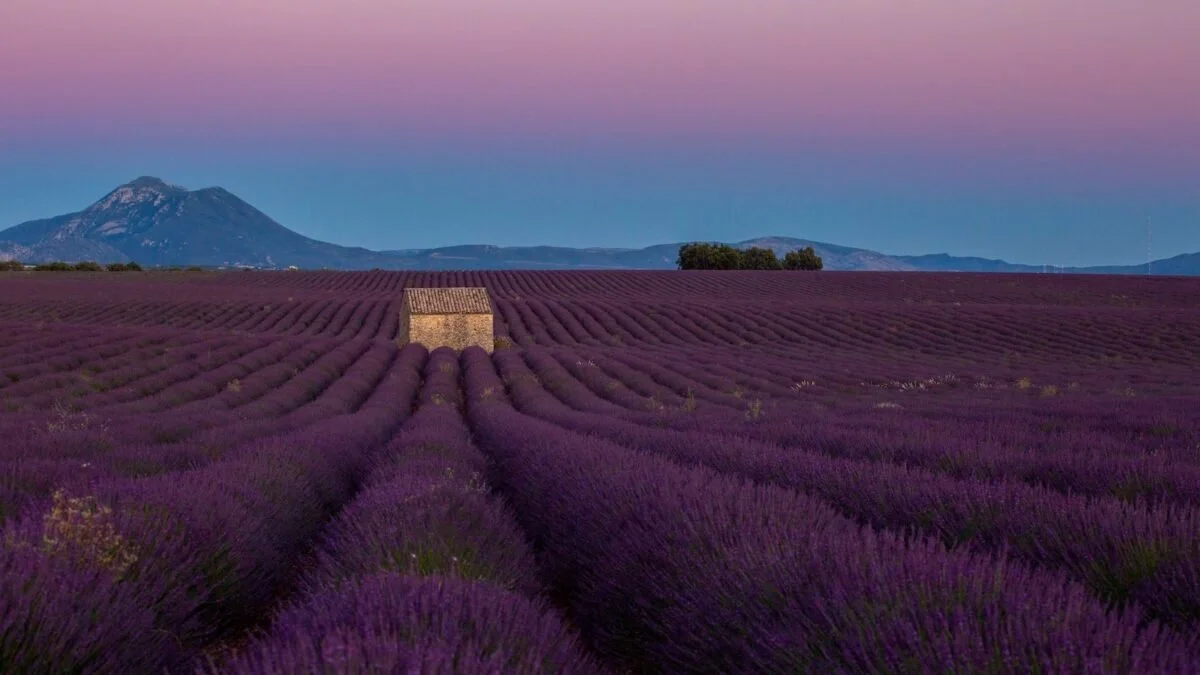
The Valensole Plateau is a working agricultural area, not a scenic destination with a car park and a gift shop. It's over 127 square kilometers of farmland where lavender cultivation dominates during the growing season. That's both the appeal and the practical challenge: finding fields in bloom requires doing some legwork in the days before your shoot.
Valensole lavender is the blue-purple variety, Lavandula angustifolia, which gives it a slightly cooler tone than other Provence regions. The fields are at their most photogenic from late June through mid-July. Wind during bloom creates waves through the flowers that add movement and depth to shots - worth planning for rather than against.
At 6:30 AM, with low-angle golden light creating long shadows between the rows and the air still cool enough to be clear, a well-composed lavender field shot essentially photographs itself. By midday the color washes out, heat haze builds, and the flat overhead light kills all the texture. By 3 PM the light is improving again.
Stop at the Valensole tourist office or ask at local cafes about which farms permit access - many farmers are used to photographers and will let you in if you ask politely and don't trample the crop. Walking directly into active fields without permission isn't acceptable. A wide-angle at field level pulls the rows into strong leading lines toward a cypress tree or farmhouse on the horizon; a 70-100mm telephoto compresses the rows and eliminates foreground clutter.
5. Les Baux-de-Provence
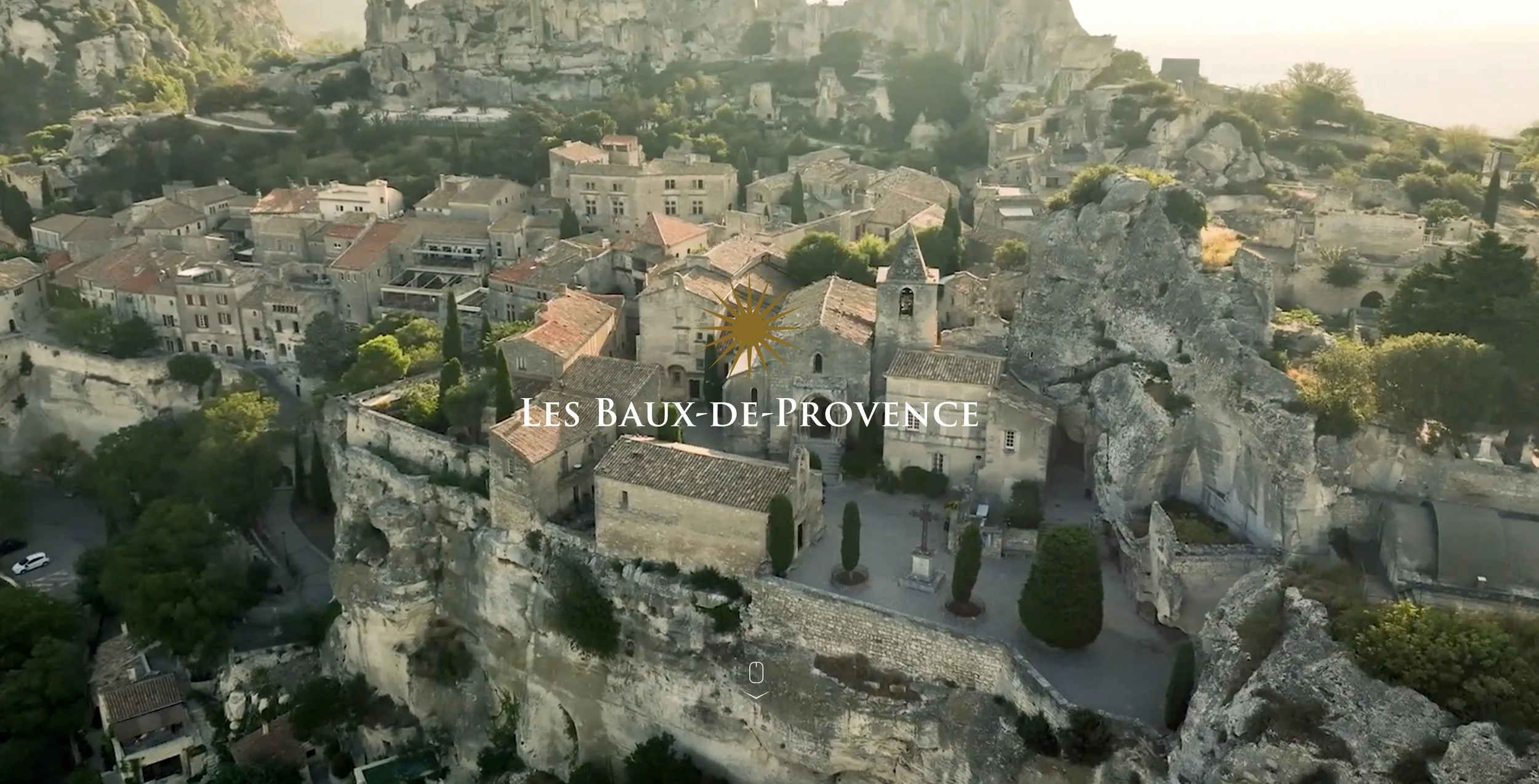
Les Baux-de-Provence sits on a limestone ridge in the Alpilles with castle ruins stretching across the top. The views are genuinely 360 degrees - olive groves and vineyard patchwork below, the Crau plain extending south toward the coast, and the rocky Alpilles ridge line in every direction.
The Château des Baux ruins are golden Provençal limestone - warm, textured, and dramatically framed against blue Mediterranean sky. Early morning light catches the castle face directly and casts long shadows across the ridge. Over 1.5 million visitors come here annually, which means arriving before 9 AM is not optional if you want any sense of space in your frames.
A note on a nearby bonus: Carrières de Lumières is a former limestone quarry converted into an immersive art installation - enormous projections on the quarry walls. The light quality inside for photography is genuinely unlike anything else, and it's a 5-minute drive from Les Baux. Not a conventional "Provence landscape" shot, but it's compelling.
6. Cassis and the Calanques
Cassis is a working fishing village with a harbor full of colorful boats, a limestone cliff face rising directly behind the town, and easy access to some of the most dramatic coastal scenery in France.
The Calanques National Park begins immediately outside town - a series of narrow limestone inlets cutting into white cliffs above water so turquoise it reads as an edit. The three closest calanques (Port-Miou, Port-Pin, En-Vau) are accessible by a 3-4km round-trip hike from Cassis, with En-Vau being the most dramatically framed but the most effort to reach.
Boat tours from Cassis harbor cover all three in 45 minutes, which gives you a different perspective - high limestone walls, narrow channel views, and the option to shoot back toward the cliffs with the village behind you. Morning light from the harbor hits the Cap Canaille cliff face (at 394m, the highest maritime cliff in France) directly; that early window before 10 AM is the time to shoot it.
A polarizing filter is particularly effective here - it cuts the surface glare off the water and makes the turquoise color read true rather than washed out.
7. Arles
Arles operates on two completely different registers for photographers: Roman heritage and Van Gogh.
The Roman amphitheatre - locally called Les Arènes - is still in use for bullfighting events and concerts. It dates from around 90 AD and holds 21,000 people; the oval exterior is a substantial architectural subject, particularly in early morning when the golden stone catches low light. Inside, the tiered seating and arena space give you geometric compositions that feel genuinely ancient.
The Van Gogh trail is a more personal exercise. Van Gogh lived in Arles from February 1888 to May 1889, and the city has marked the locations where he painted. The Café de la Nuit on Place du Forum is one - the same terrace he painted in Café Terrace at Night, still there, still yellow. The hospital garden where he painted during his stay (now the Espace Van Gogh) is a few minutes' walk. The Pont de Langlois drawbridge - the subject of several Van Gogh paintings - is 3km south of town. These locations have deep photographic resonance: you're shooting the same subjects he painted, in the same light, 138 years later.
Les Alyscamps, the ancient necropolis on the eastern edge of the old town, is undervisited and photographically rich - a long avenue of stone sarcophagi under a canopy of trees, quiet enough at dawn that you can genuinely feel the place.
The Rencontres d'Arles photography festival runs through July and early August. If your trip overlaps, it's worth building time around - the exhibitions are shown in extraordinary historic spaces across the city.
8. Camargue
The Camargue is unlike anywhere else in Provence. It's a vast river delta - the Rhône meets the Mediterranean here - creating a landscape of salt marshes, lagoons, reeds, and flat, enormous sky. The photography subjects are flamingos, wild white horses, black bulls, and the sheer quality of light over open water.
Greater flamingos are year-round residents - around 15,000 breed in the Camargue - but spring and summer are the most reliably active periods, with large flocks visible at the salt pans near Salin-de-Giraud and Aigues-Mortes. A telephoto of 300mm or more is the practical minimum for flamingo photography without disturbing the birds; 400-600mm gives you tight portraits. Plan for early morning when the birds are feeding actively and the light is low.
The white Camargue horses are technically semi-wild - they live in free-roaming herds in the marshes but are managed by gardians (traditional herders). The best photography opportunities come from the D570 road running through the reserve, where herds often graze near the roadside in the early morning. The Parc Naturel Régional de Camargue has marked trails with hides that give you closer access to birds without disturbing them.
The pink salt flats near Aigues-Mortes are a genuinely unusual subject - geometric salt harvest patterns, pink-tinted water from halophilic bacteria, and industrial salt mounds that create abstract landscape photographs completely unlike anything else in Provence.
Light by time of day
Provence's Mediterranean climate means 300+ sunny days per year and very reliable light. The structure of a shooting day:
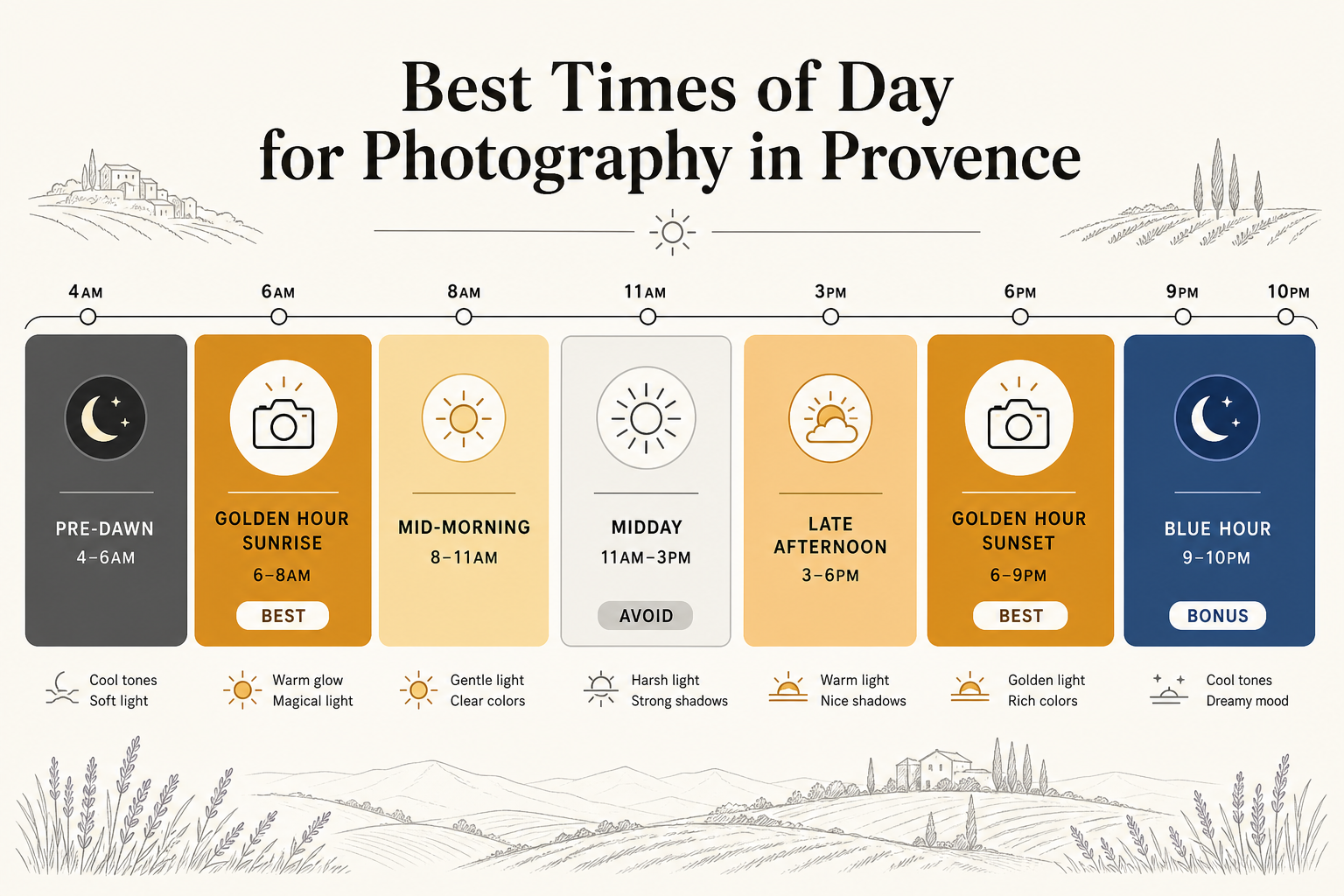
In midsummer, sunrise is around 5:30 AM and sunset past 9 PM. That gives you two golden hour windows per day - use both. Midday is for driving between locations, lunch in a village, or macro photography in open shade. If you're only shooting lavender and don't have the stamina for pre-dawn starts, the late afternoon window from 4 PM to sunset is the strongest single slot - the light is warm, directional, and the worst crowds have started to thin.
The Provençal light has a quality that's genuinely hard to describe and easy to photograph: clean, saturated, and warm. Colors render more richly than in northern light. A polarizing filter deepens this further - sky contrast improves, water color intensifies, and lavender saturation increases noticeably.
A monopod is a more practical alternative to a tripod for Provence - lighter to carry, and you won't be turned away at sites like Sénanque where tripods are prohibited. Weather protection for your gear is a minor concern (it rarely rains in summer), but coastal salt spray near Cassis warrants wiping down regularly.
The most important gear decision in Provence: bring enough memory cards. Golden hour at the Valensole Plateau can generate several hundred frames before breakfast.
Frequently Asked Questions
When is the best time to photograph lavender in Provence?
The peak lavender bloom at Valensole Plateau runs from late June through mid-July. Sénanque Abbey's famous abbey-and-lavender shot is best in early July. If you miss the Valensole window, Sault blooms one to two weeks later, giving you a second chance. Whatever your dates, plan sunrise shoots - golden hour light and blue-purple lavender is an unbeatable combination.
Do I need a car to photograph Provence?
Yes - a car is close to essential. The most photogenic locations (Valensole Plateau, Sénanque Abbey, Les Baux-de-Provence, Gordes) are not reliably served by public transport. The D177 road to Sénanque Abbey is a narrow winding lane best navigated by car. Renting from Avignon , Aix-en-Provence , or Marseille gives you the flexibility to chase golden hour across multiple locations.
Are drones allowed at Provence photography locations?
Drone rules vary sharply by location. Sénanque Abbey restricts drones out of respect for monastic life and heritage conservation. The Calanques National Park near Cassis has strict no-fly zones. Always check French civil aviation authority (DGAC) regulations and local restrictions before flying. Most lavender plateau areas require prior authorization from local authorities.
What camera gear should I bring to Provence?
A wide-angle lens (16-35mm) handles lavender fields, calanques, and village panoramas. A telephoto (70-200mm) compresses distant hilltop silhouettes and reaches flamingos in the Camargue without disturbing them. A polarizing filter is worth the bag space - it cuts sky glare and makes lavender pop by 20-30% in saturation. A monopod is a useful tripod alternative at Sénanque, where tripods are prohibited.
How crowded does Provence get during lavender season?
Very. July at Valensole and Sénanque can feel like a theme park - tour buses, Instagram crowds, and 40 photographers jostling for the same angle. The fix is simple: arrive at or before sunrise. By 7 AM at Sénanque you'll share the abbey with maybe a handful of other early risers. By 10 AM it's packed. September and May offer the best crowd-to-light ratio outside lavender season - pleasant weather, fewer visitors, and the same Provençal light.







Get Free Presets for Lightroom created by top photographers to update your presets collection, save down on editing time, and open up new artistic horizons.

Introducing the Idyllic Santorini Lightroom Presets Collection, created for both mobile and desktop versions of Lightroom. Inspired by the timeless beauty of Santorini, this collection captures the feeling of returning home from an unforgettable journey with a camera full of memories. Whitewashed villages glowing in the afternoon sun, charming streets adorned with bougainvillea, leisurely breakfasts overlooking the sea, and soft pink sunsets melting into the horizon.
BUY NOW